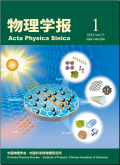
物理学报2017,Vol.66Issue(14):153-170,18.DOI:10.7498/aps.66.147101
基于DNA自组装的金属纳米结构制备及相关纳米光子学研究
DNA self-assembly-based fabrication of metallic nanostructures and related nanophotonics
摘要
Abstract
Nanophotonics focuses on the study of the behavior of light and the interaction between light and matter on a nanometer scale. It has often involved metallic nanostructures which can concentrate and guide the light beyond the diffraction limit due to the unique surface plasmons (SPs). Manipulation of light can be accomplished through controlling the morphologies and components of metallic nanostructures to incur special surface plasmons. However, it is still a severe challenge to achieve exquisite control over the morphologies or components of metallic nanostructures:chemical methods can provide anisotropic but highly symmetric metallic nanostructures; lithographic methods have a limited resolution, especially for three-dimensional metallic nanostructures. By comparison, DNA self-assembly-based fabrication of metallic nanostructures is not restricted to these confinements. With the high-fidelity Waston-Crick base pairing, DNA can self-assemble into arbitrary shapes ranging from the simplest double strands to the most sophisticated DNA origami. Due to the electrostatic interactions between negatively charged phosphate backbones and positively charged metal ions, as well as the sequence-dependent DNA-metal interactions, DNA can affect the metal ions to a certain degree. Depending on the shape and sequence, DNA self-assembly nanostructures can exert different influences on the growth of metallic nanoparticles, which in turn gives rise to deliberately controllable metallic nanostructures. Besides, DNA self-assembly nanostructures can act as ideal templates for the organization of metallic nanoparticles to construct special metallic nanostructures. In this case, DNA-modified metallic nanoparticles are immobilized on DNA self-assembly nanostructures carrying complementary sticky ends. The geometry and component arrangements of metallic nanostructures both can be precisely dictated on the DNA nanostructures by programming the sticky end arrays. Complicated metallic nanostructures which can be hardly fabricated with conventional chemical or lithographic methods have been readily prepared with the DNA self-assembly-based fabrication method, thereby greatly promoting the development of nanophotonics. Therefore, the studies of DNA self-assembly-based fabrication of metallic nanostructures and related nanophotonics have received rapidly growing attention in recent years. This review first gives a brief introduction of the mechanism for breaking the diffraction limit of light with metallic nanostructures based on SPs. Then we give a systematic review on DNA self-assembly-based fabrication of metallic nanostructures and related nanophotonics, which is divided into several parts according to the different pathways by which DNA self-assembly can influence the morphologies or components of metallic nanostructures. Finally, the remaining problems and limitations for the existing DNA self-assembly-based fabrication of metallic nanostructures are presented and an outlook on the future trend of the field is given as well.关键词
DNA/纳米光子学/表面等离子体/金属纳米结构Key words
DNA/nanophotonics/surface plasmons/metallic nanostructures引用本文复制引用
张祎男,王丽华,柳华杰,樊春海..基于DNA自组装的金属纳米结构制备及相关纳米光子学研究[J].物理学报,2017,66(14):153-170,18.基金项目
国家重点基础研究发展计划 (批准号: 2013CB932803)、国家自然科学基金 (批准号: 21473236, 31371015) 和中国科学院青年创新促进会资助的课题. Project supported by the National Basic Research Program of China (Grant No. 2013CB932803), the National Natural Science Foundation of China (Grant Nos. 21473236, 31371015), and the Youth Innovation Promotion Association of Chinese Academy of Sciences. (批准号: 2013CB932803)