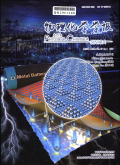
物理化学学报2020,Vol.36Issue(3):106-119,14.DOI:10.3866/PKU.WHXB201905080
非金属掺杂石墨相氮化碳光催化的研究进展与展望
Progress and Prospects of Non-Metal Doped Graphitic Carbon Nitride for Improved Photocatalytic Performances
摘要
Abstract
Since Fujishima and Honda demonstrated the photoelectrochemical water splitting on TiO2 photoanode and Pt counter electrode, photocatalysis has been considered as one of the most promising technologies for solving both the problems of environmental pollution and energy shortage. This process can effectively use solar energy, the most abundant energy resource on the earth, to drive various catalytic reactions, such as water splitting, CO2 reduction, organic pollutant degradation, and organic synthesis, for energy generation and environmental purification. Except for the various metal-based semiconductors, such as metal oxides, metal sulfides, and metal oxynitrides, developed for photocatalysis, graphitic carbon nitride (g-C3N4) has attracted significant attention in the recent years because of its earth abundancy, non-toxicity, good stability, and relatively narrow band gap (2.7 eV) for visible light response.However, g-C3N4 suffers from insufficient absorption of visible light in the solar spectrum and rapid recombination of photogenerated electrons and holes, thus resulting in low photocatalytic activity. Until now, various strategies have been developed to enhance the photocatalytic activity of g-C3N4, including element doping, nanostructure and heterostructure design, and co-catalyst decoration. Among these methods, element doping has been found to be very effective for adjusting the unique electronic and molecular structures of g-C3N4, which could significantly expand the range of photoresponse under visible light and improve the charge separation. Especially, non-metal doping has been well investigated frequently to improve the photocatalytic activity of g-C3N4. The non-metal dopants commonly used for the doping of g-C3N4 include oxygen (O), phosphorus (P), sulfur (S), boron (B), and halogen (F, Cl, Br, I) and also carbon (C) and nitrogen (N) (for self-doping), as they are easily accessible and can be introduced into the g-C3N4 framework through different physical and chemical synthetic methods. In this review article, the structural and optical properties of g-C3N4 is introduced first, followed by a brief introduction to the modification of g-C3N4 as photocatalysts. Then, the progress in the non-metal doped g-C3N4 with improved photocatalytic activity is reviewed in detail, with the photocatalytic mechanisms presented for easy understanding of the fundamentals of photocatalysis and for guiding in the design of novel g-C3N4 photocatalysts. Finally, the prospects of the modification of g-C3N4 for further advances in photocatalysis is presented.关键词
石墨相氮化碳(g-C3N4)/非金属掺杂/光催化/能带结构/电子结构Key words
Graphitic carbon nitride (g-C3N4)/Non-metal doping/Photocatalysis/Band structure/Electronicstructure分类
化学化工引用本文复制引用
王亦清,沈少华..非金属掺杂石墨相氮化碳光催化的研究进展与展望[J].物理化学学报,2020,36(3):106-119,14.基金项目
The project was supported by the National Natural Science Foundation of China (21875183, 51672210, 51888103). 国家自然科学基金(21875183, 51672210, 51888103)资助项目 (21875183, 51672210, 51888103)