物理化学学报2025,Vol.41Issue(9):4-21,18.DOI:10.1016/j.actphy.2025.100108
电化学降解污水中含氮废弃物的升值策略
Valorization strategies for electrodegradation of nitrogenous wastes in sewage
摘要
Abstract
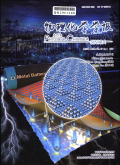
The interconversion of N2 and N-containing compounds is central to the natural nitrogen cycle,one of the most important global biogeochemical cycles,which plays a crucial role in sustaining life across all organisms.Nitrogen pollution in surface water bodies,caused by the indiscriminate discharge of industrial and domestic wastewater,has become a global environmental concern.The excessive accumulation of nitrogenous wastes poses a serious threat to human health and disrupts the natural nitrogen cycle.Traditional water purification methods,such as chemical redox processes,physical adsorption,and biological treatments,often face limitations,including high energy consumption,low efficiency,large space requirements,prolonged treatment times,sludge generation,and high operating costs.Emerging electrochemical degradation techniques offer promising solutions for efficiently degrading nitrogenous wastes.These electrochemical technologies demonstrate advantages in cost-effectiveness,environmental friendliness,high efficiency,and broad applicability,while also presenting opportunities to generate added value during the electrodegradation processes.Nitrogen-containing wastes in wastewater can be classified into electrophiles(e.g.,nitrate and nitrite)and nucleophiles(e.g.,ammonia nitrogen,hydrazine,and urea)according to their redox properties.Based on the different properties of nitrogenous wastes,coupling corresponding electrochemical degradation reactions with tailored electrochemical energy storage and conversion devices provides opportunities for additional energy and value generation.Herein,advanced insights into valorization strategies during the electrodegradation processes of representative nitrogenous wastes in sewage are subtly provided,where the approaches for enhanced value output efficiency are highlighted,including(i)coupling the electroreduction of electrophilic pollutants with Zn-electrophile batteries to achieve energy output and simultaneous chemical production,(ii)coupling electro-oxidation of nucleophilic pollutants with hybrid direct fuel cells to realize energy output,(iii)applying hybrid water electrolysis systems assisted with nucleophilic wastes for energy-saving and clean H2 production,(iv)assembling Zn-nucleophile batteries for energy storage and hydrogen production,and(v)producing valuable chemicals via C―N coupling processes.The cell design,coupled with selection criteria and optimizing strategies of advanced electrodes and cell configuration,is highlighted.Finally,an in-depth analysis of current challenges and future prospects is provided to deepen the understanding of advanced electrochemical cells and bridge the gap between experimental trials and practical applications with respect to mechanism investigation,electrode design and evaluation,and cell design.关键词
水净化/电化学降解/锌基电池/电解水/直接燃料电池/C―N耦合Key words
Water purification/Electrodegradation/Zn-based battery/Water electrolysis/Direct fuel cell/C―N coupling分类
化学化工引用本文复制引用
孙明磊,袁忠勇..电化学降解污水中含氮废弃物的升值策略[J].物理化学学报,2025,41(9):4-21,18.基金项目
The project was supported by the National Natural Science Foundation of China(22179065)and the Ph.D.Candidate Research Innovation Fund of NanKai University School of Materials Science and Engineering. 国家自然科学基金(22179065)和南开大学材料科学与工程学院博士研究生科研创新基金资助项目 (22179065)